Technology Radar on the Topic of Biometric Identification
In June 2024, the National Data Protection Authority (ANPD) published its second technology radar, featuring a study on biometrics and facial recognition that presented definitions and key nuances regarding personal data collection.
Notably, the radar highlights that innovations resulting from facial recognition—based on Artificial Intelligence technologies such as machine learning and deep learning, where algorithms are routinely trained to learn and extract facial features and properties from large datasets—represent a technological advancement that can pose risks of privacy intrusion and threats to the civil rights and freedoms of data subjects, potentially even causing discriminatory effects of a racial, social, ethnic, gender, or economic nature, among others.

Furthermore, the ANPD document highlights the need for the approach taken by innovative technologies in this technical field to adhere to the appropriate processing of sensitive data, considering the requirements of the General Personal Data Protection Law (LGPD – Law No. 13,709 of August 14, 2018) and the potential risks involved regarding privacy and personal data protection—for instance, in environments related to public safety, education, and the commercial use of biometric data—even providing real-world scenario examples within the Brazilian context.
In this regard, it is worth noting that the various paths being pursued by entities developing new technological solutions in biometrics and personal data collection can be accessed through the rich sources of technological intelligence available in patent documents.
Specifically, within these patent documents, existing technical solutions can be found that could address, for example, some of the issues raised by the ANPD.
Consider, for example, the main concepts in patent applications within the technical field of biometrics and facial recognition identified by the Ritter Patent Research Observatory (RPRO), a Patent Technology Monitoring service that generates alerts to track publications across various patent databases worldwide (INPI/Brazil, USPTO, EPO, CNIPA, among others):

Search criteria: “biometric and facial recognition” in “title, abstract, or claims”

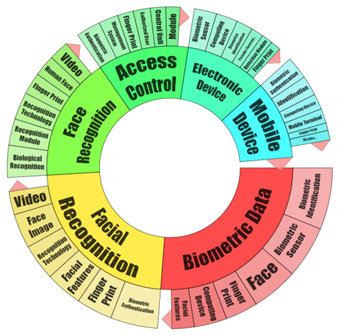
Therefore, technological inspection and monitoring through tools like the RPRO—aiming to adopt a competitive, dynamic, differentiated, and proactive strategic posture against competitors within the patent information environment—proves to be an essential path for the survival of any responsible company that needs to:
Identify the technological pathways being pursued by competitors in patent matters;
Raise administrative or judicial obstacles to the granting of competitors' patents;
Anticipate strategic decision-making regarding competing technologies, potentially choosing to license or purchase (assign) third-party patents;
Identify which countries and/or regions of the world competitors' patent applications have been extended to;
Observe technological concepts that can feed, enhance, and leverage research and development processes, culminating in the design of new methodologies and/or disruptive products, or enabling the improvement of third-party products; and
Avoid wasting time and resources developing already protected technologies, thereby minimizing the risk of infringing on third-party rights.

Search criteria: “biometric and facial recognition” in “title, abstract, or claims”
Worldwide Activity: Main locations and patent applicants in the technical field of biometrics and facial recognition identified by the RPRO – Ritter Patent Research Observatory service
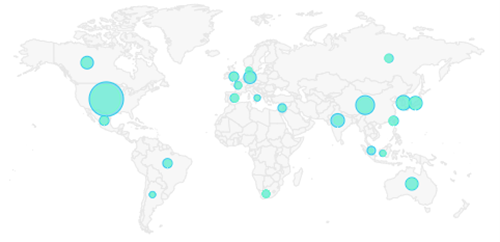
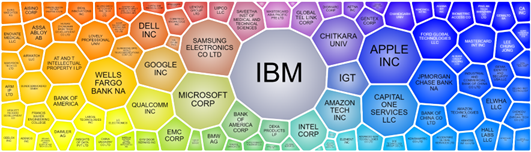
Analyzing and monitoring technological activities through tools such as the Ritter Patent Research Observatory (RPRO) can provide valuable insights for companies interested in innovation and competitiveness, enabling the identification of technological pathways, guidance for strategic decisions, and the minimization of legal risks.


Comments