Ambush Marketing at the World Cup: Legal Limits and Best Practices for Brands
The 2026 World Cup is approaching, and with it comes a new wave of advertising campaigns inspired by the largest sporting event on the planet. For brands, this represents a major visibility opportunity, but also significant legal exposure—especially regarding so-called ambush marketing.
This issue is not new, but it gains renewed relevance with each edition of the tournament due to the strict stance of the Fédération Internationale de Football Association (FIFA) in protecting its intellectual property assets and preserving the commercial exclusivity granted to its official sponsors.
What is ambush marketing?
Ambush marketing occurs when a brand attempts to associate itself with a major event without authorization or an official relationship with its organizers.
This practice can manifest in different ways, and Brazilian law recognizes two main modalities: by association and by intrusion.
Both share the common objective of obtaining an undue advertising advantage, but they differ in execution—one attempts to create a symbolic link with the event, while the other directly exposes brands in official venues without authorization.
Ambush Marketing by Association
Occurs when a brand seeks to associate itself directly or indirectly with an event or its official symbols without the organizer's (in this case, FIFA's) authorization, with the aim of gaining an economic or advertising advantage.
This practice leads the public to believe that the product or service is an official sponsor, supporter, or endorsed by the event, even without a legitimate link.
Example: Campaigns using trademarks, logos, phrases, colors, slogans, or images that evoke the World Cup, suggesting a non-existent institutional relationship.
Ambush Marketing by Intrusion
Characterized by the unauthorized promotion of brands or products inside official event venues, intending to attract the attention of attendees or broadcast audiences.
The infringement occurs when an attempt is made to exploit the competition's physical environment to gain visibility or improper association without any contract or permission.
Example: Distributing giveaways, displaying brand-associated images or colors as promotional actions in stadiums and controlled-access areas without FIFA authorization.
In both cases, there is a potential violation of intellectual property rights, as well as an infringement of unfair competition laws and misleading advertising regulations.
Protecting FIFA's assets: Tight defense
FIFA maintains an extensive trademark portfolio:
The name “FIFA World Cup” and its linguistic variations;
Official tournament logos and emblems;
Representations of the World Cup trophy;
Slogans and mascots of each edition; and
Expressions associated with the event, such as “Copa do Mundo” or “World Cup.”
These distinctive signs are registered and monitored internationally. Unauthorized use in advertising campaigns, products, or promotional actions can result in cease-and-desist notices, judicial measures, and even immediate suspension orders for campaigns or recalls of products improperly using assets owned by the Federation.
Emblematic cases: When the dribble becomes a foul
One of the earliest episodes of ambush marketing occurred during the 1970 World Cup, when Pelé paused in the center of the pitch to tie his boots, prompting the camera operator to zoom in on the player—an act later revealed to be part of an unauthorized marketing action by Puma.
Decades later, in 2010, the brewery Bavaria orchestrated the entrance of dozens of female fans dressed in brand-colored outfits during a South Africa World Cup match. This constituted an improper association with the tournament, as Budweiser (whose brand is identified by the color red) was the official sponsor and held exclusive rights in the beverage category.

On the other hand, there are examples of so-called "opportunity marketing," which demonstrate how brands can join the World Cup spirit without infringing on rights.
Opportunity marketing: Fair play
Opportunity marketing is the safe alternative for brands wishing to capitalize on the engagement generated by the World Cup.
It rests on three pillars:
Context, not association: Exploiting the event's cultural and emotional atmosphere without implying an institutional connection;
Authentic creativity: Emphasizing and showcasing the brand's own identity;
Legal compliance: Prior review of campaigns and advertising materials.
This strategy makes it possible to legitimately leverage the event's atmosphere while respecting legal boundaries and third-party rights.
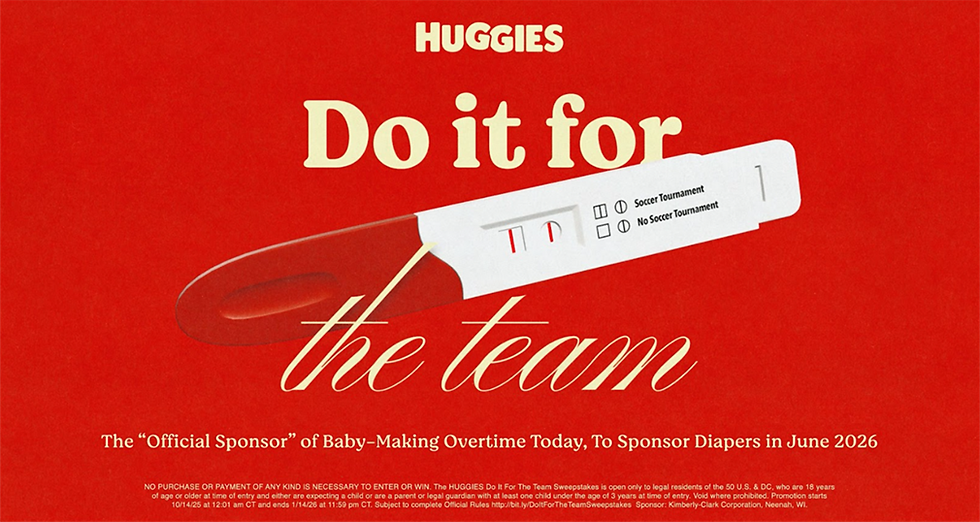
For 2026, for instance, Huggies launched a clever campaign: the diaper brand suggests that fans take advantage of the tournament's excitement to "add one more player to the team" so that, nine months later, they can lift the greatest trophy of all—paternity leave during the matches. A creative and legitimate campaign that refrains from using any FIFA symbol or trademark.
Final Whistle
The World Cup is one of the largest stages for commercial visibility on Earth, but it is also one of the most strictly regulated from a legal standpoint.
With advertising campaigns intensifying for the 2026 tournament, it is essential for companies and agencies to proceed with careful planning and legal-technical backing, ensuring their communications comply with intellectual property, competition, and advertising rules.


Comments