Nosferatu, Dracula, and Intellectual Property: A Horror Classic and Its Legal Ramifications
On January 2, the highly anticipated Nosferatu hit Brazilian theaters. Directed by Robert Eggers, renowned for works such as The Witch and The Lighthouse, the film revisits a cinematic classic and, intriguingly, prompts reflection on intellectual property issues.
But what does this reimagining of a horror classic have to do with copyright?
The connection lies in Nosferatu's controversial origins. Originally released in Germany in 1922, the film directed by F. W. Murnau is widely recognized as a milestone of Expressionist cinema and a pioneer of the horror genre. The narrative follows a real estate agent negotiating the sale of a castle to the eccentric Count Orlok, an ancient vampire—a storyline that, for many, sounds strikingly familiar.
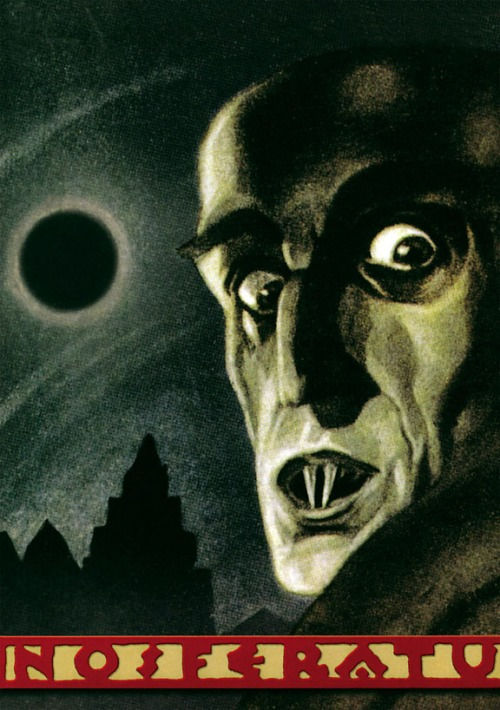
Indeed, this striking similarity perceived between Count Orlok's story and the narrative of the famous Count Dracula—a character from Bram Stoker's 1897 novel—was recognized by German courts.
As it turned out, Bram Stoker's widow, Florence Balcombe—the author having passed away in 1912—inherited the copyright to the celebrated work. For it to be adapted on German soil (as well as across the territories of other Berne Convention signatories at the time), proper licensing fees should have been paid.
Florence, recognizing the direct influence of Dracula on Nosferatu, filed a lawsuit with the support of the British Incorporated Society of Authors (SoA) against those responsible for the 1922 feature film. Her demands were clear: financial compensation and the destruction of all copies of the film.
Although the production company behind Nosferatu, Prana Film, declared bankruptcy before the judgment, Florence succeeded in her claim, and in 1925, a German court ordered all negatives and copies of the film to be destroyed.
Despite the court ruling, several copies of Nosferatu survived clandestinely, including in the United States. Curiously, in the U.S., due to an alleged defect in the copyright protection of the novel Dracula, Stoker's work was not protected under American law, allowing it to be reproduced without restriction. This occurred in part because the U.S. was not a signatory to the Berne Convention until 1988, exempting it from adhering to its international protection standards.
This legal loophole allowed Nosferatu to be screened in the United States and become a cult classic, ensuring its preservation and dissemination over a century. Later, the adaptation rights to Dracula were acquired by Universal Studios, which released the first official film adaptation of the work in 1931.
Following Bram Stoker's death, Dracula entered the public domain in 1962, in accordance with the copyright protection rules in effect at the time—50 years after the renowned author's passing. Since then, the work has inspired countless productions, cementing its place as one of the most influential narratives in literature and cinema.
The legal dispute involving Nosferatu and Dracula left an important legal legacy. Just as Dracula continues to inspire generations of creators, the story of Nosferatu remains alive—both as a horror masterpiece and as a key force in setting a legal precedent in favor of authorial creations and the rights of their respective owners.
Sources:
BAILEY, Jonathan. Dracula vs. Nosferatu: A True Copyright Horror Story. Copyright Alliance, Oct 31, 2019. Available at: https://copyrightalliance.org/dracula-vs-nosferatu-a-true-copyright-horror-story/
POWER, Ed. Nosferatu and the fangs of copyright infringement. The Irish Times, Feb 25, 2022. Available at: https://www.irishtimes.com/culture/film/nosferatu-and-the-fangs-of-copyright-infringement-1.4814233
MATTHIAS, Meg. Can Copyright Infringement Kill a Vampire? Encyclopædia Britannica, Nov 24, 2020. Available at: https://www.britannica.com/story/can-copyright-infringement-kill-a-vampire


Comments